BEGIN:VCALENDAR
VERSION:2.0
PRODID:-//ChamberMaster//Event Calendar 2.0//EN
METHOD:PUBLISH
X-PUBLISHED-TTL:P1H
REFRESH-INTERVAL:P1H
CALSCALE:GREGORIAN
BEGIN:VTIMEZONE
TZID:America/New_York
BEGIN:DAYLIGHT
RRULE:FREQ=YEARLY;BYMONTH=3;BYDAY=2SU
DTSTART:20070101T000000
TZOFFSETFROM:-0500
TZOFFSETTO:-0400
TZNAME:Eastern Daylight Time
END:DAYLIGHT
BEGIN:STANDARD
RRULE:FREQ=YEARLY;BYMONTH=11;BYDAY=1SU
DTSTART:20070101T000000
TZOFFSETFROM:-0400
TZOFFSETTO:-0500
TZNAME:Eastern Standard Time
END:STANDARD
END:VTIMEZONE
BEGIN:VEVENT
DTSTART;TZID=America/New_York:20260707T120000
DTEND;TZID=America/New_York:20260707T130000
X-MICROSOFT-CDO-ALLDAYEVENT:FALSE
SUMMARY:PHN Presents: The Dark Side of a Bright Future
DESCRIPTION:Shady Strategies to Survive Climate Change Tuesday\, July 7th\, 2026\, Noon-1 PM ET Register Now Shade can play a vital role in enhancing livability\, human health\, and sustainability\, especially in historically temperate cities that face a future of extreme heat. As global climate change and urban development raises local temperatures\, access to shade will soon become essential infrastructure for survivability and environmental justice. Learn how awnings\, trees\, and more thoughtful urban design can cool the city\, reduce emissions\, and make our public spaces safer and more accessible to all. Shade's distribution reflects profound inequalities\, and expanding access can help shape a cooler and fairer future. Credit AIA/PHI Pending Learning Objectives Describe how climate change is making extreme heat events worse and human-made factors that contribute to the problem of overheating. Outline the damaging effects of overheating and extreme heat events. Describe why shading is an important strategy in reducing overheating and the negative health consequences. Outline strategies for introducing effective shading in buildings\, communities\, and cities.Featured Presenter Sam Bloch Sam Bloch is an environmental journalist and the author of Shade: The Promise of a Forgotten Natural Resource\, a "compelling conversation-starter" (NPR) and New Yorker Best Book of 2025. He has covered climate change and the built environment for publications including Places Journal\, Slate\, CityLab\, The New York Times\, and Landscape Architecture Magazine\, and written about art and music for L.A. Weekly\, Art in America\, and Artnet\, among others. Previously\, he was a staff writer at The Counter\, where he reported on food and agriculture. Bloch is a graduate of the Columbia Journalism School\, and a former MIT Knight Science Journalism Fellow and Emerson Collective Fellow. He is based in New York City\, where he lives with his partner and their son.
X-ALT-DESC;FMTTYPE=text/html: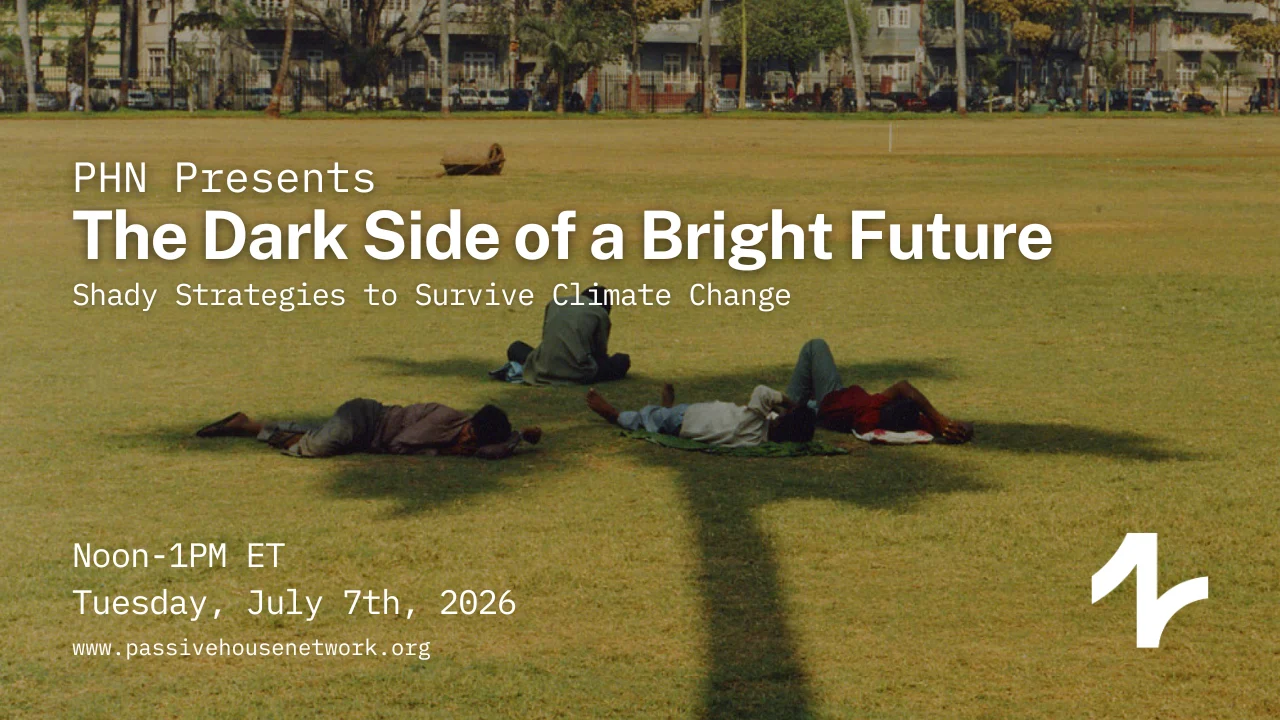
Shady Strategies to Survive Climate Change \;
Tuesday\, July 7th\, 2026\, Noon-1 PM ET \;
Register Now \;
Shade can play a vital role in enhancing livability\, human health\, and sustainability\, especially in historically temperate cities that face a future of extreme heat. As global climate change and urban development raises local temperatures\, access to shade will soon become essential infrastructure for survivability and environmental justice. Learn how awnings\, trees\, and more thoughtful urban design can cool the city\, reduce emissions\, and make our public spaces safer and more accessible to all. Shade&rsquo\;s distribution reflects profound inequalities\, and expanding access can help shape a cooler and fairer future. \;
Credit AIA/PHI &ndash\; Pending \;
Learning Objectives \;
- Describe how climate change is making extreme heat events worse and human-made factors that contribute to the problem of overheating. \;
- Outline the damaging effects of overheating and extreme heat events. \;
- Describe why shading is an important strategy in reducing overheating and the negative health consequences. \;
- Outline strategies for introducing effective shading in buildings\, communities\, and cities.
Featured Presenter &ndash\; Sam Bloch \;
Sam Bloch is an environmental journalist and the author of Shade: The Promise of a Forgotten Natural Resource\, a &ldquo\;compelling &hellip\; conversation-starter&rdquo\; (NPR) and New Yorker Best Book of 2025. He has covered climate change and the built environment for publications including Places Journal\, Slate\, CityLab\, The New York Times\, and Landscape Architecture Magazine\, and written about art and music for L.A. Weekly\, Art in America\, and Artnet\, among others. Previously\, he was a staff writer at The Counter\, where he reported on food and agriculture. Bloch is a graduate of the Columbia Journalism School\, and a former MIT Knight Science Journalism Fellow and Emerson Collective Fellow. He is based in New York City\, where he lives with his partner and their son.
LOCATION:
UID:e.4518.1485256
SEQUENCE:3
DTSTAMP:20260629T193703Z
URL:https://members.nypassivehouse.org/main-calendar/Details/phn-presents-the-dark-side-of-a-bright-future-1760938?sourceTypeId=Hub
END:VEVENT
END:VCALENDAR