
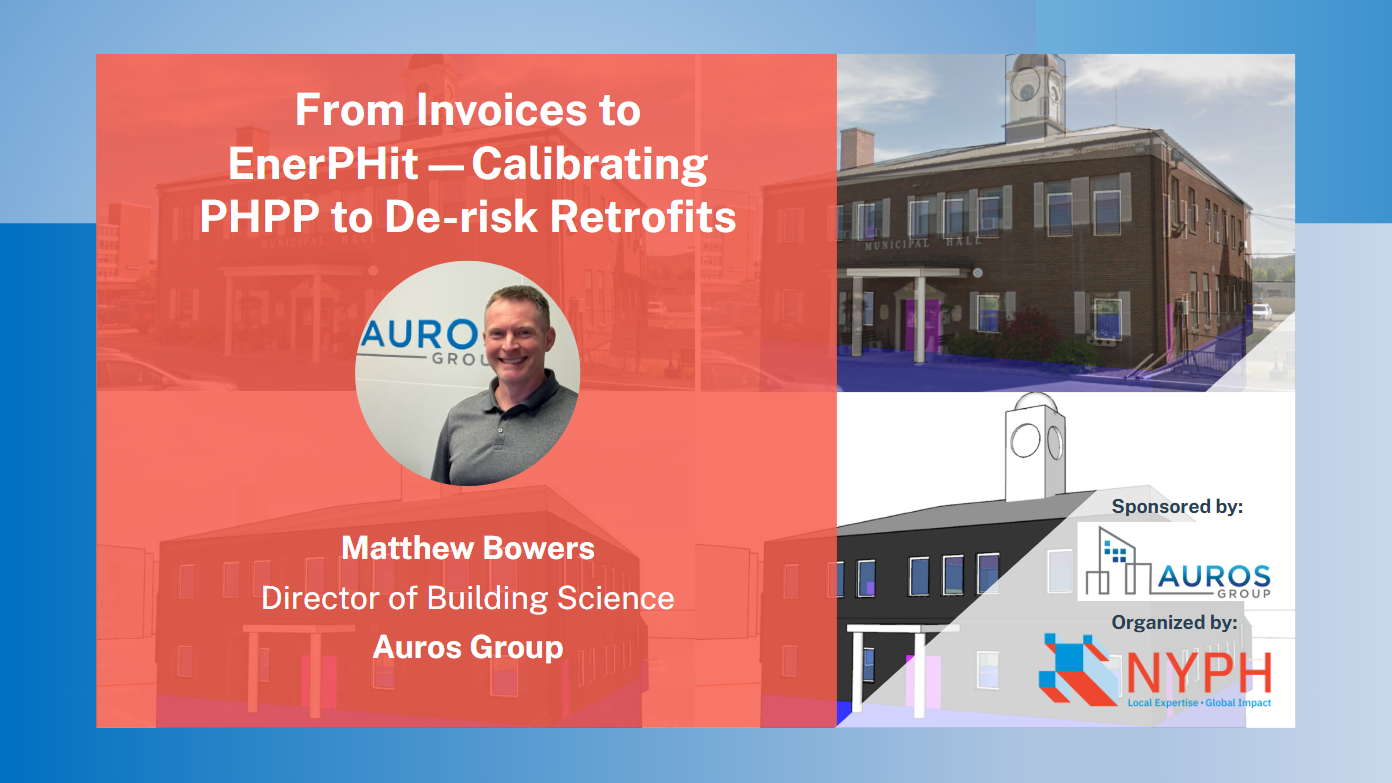
From Invoices to EnerPHit—Calibrating PHPP to De-risk Retrofits
Monday, April 13, 2026 (12:00 PM - 1:00 PM) (EDT)
Description
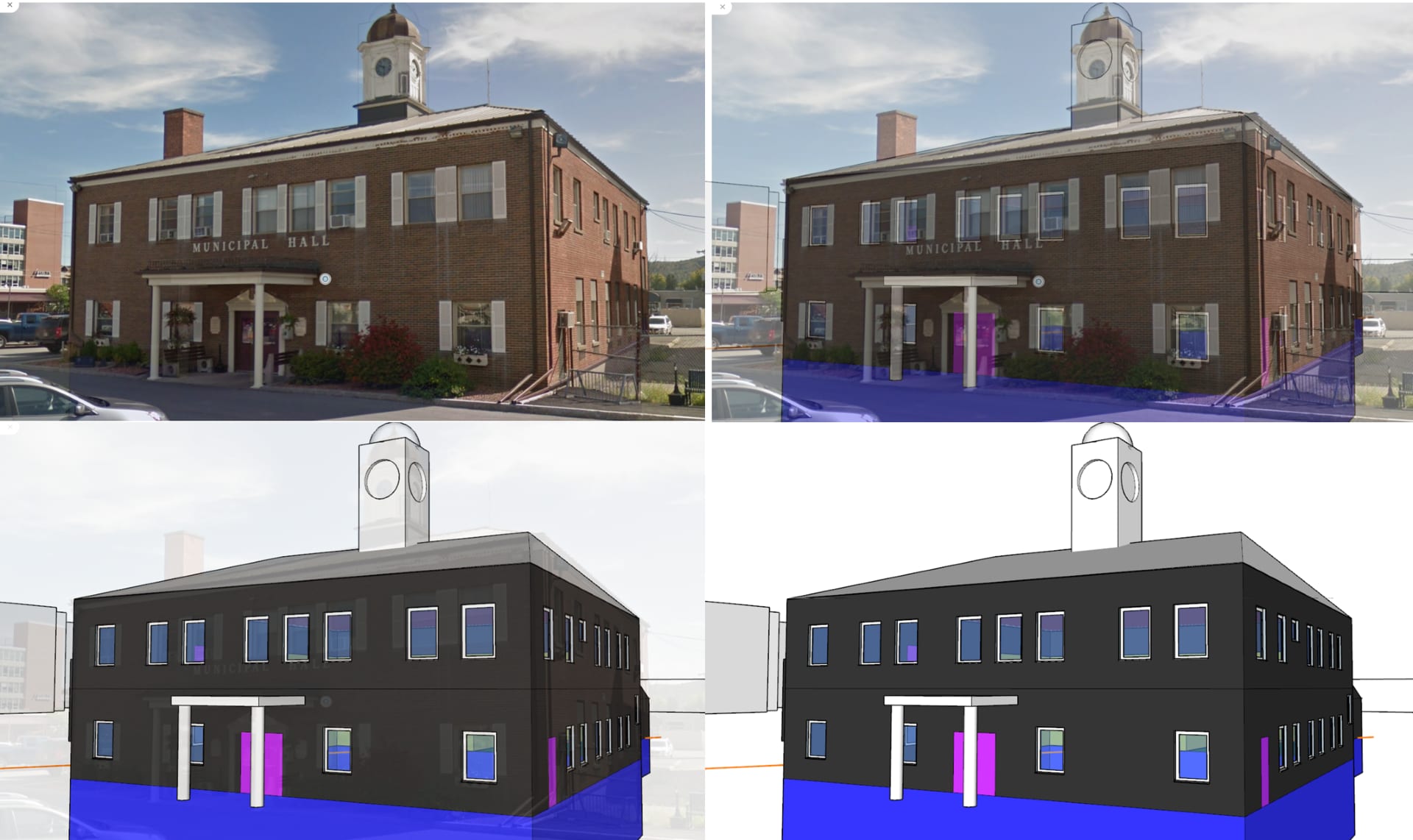
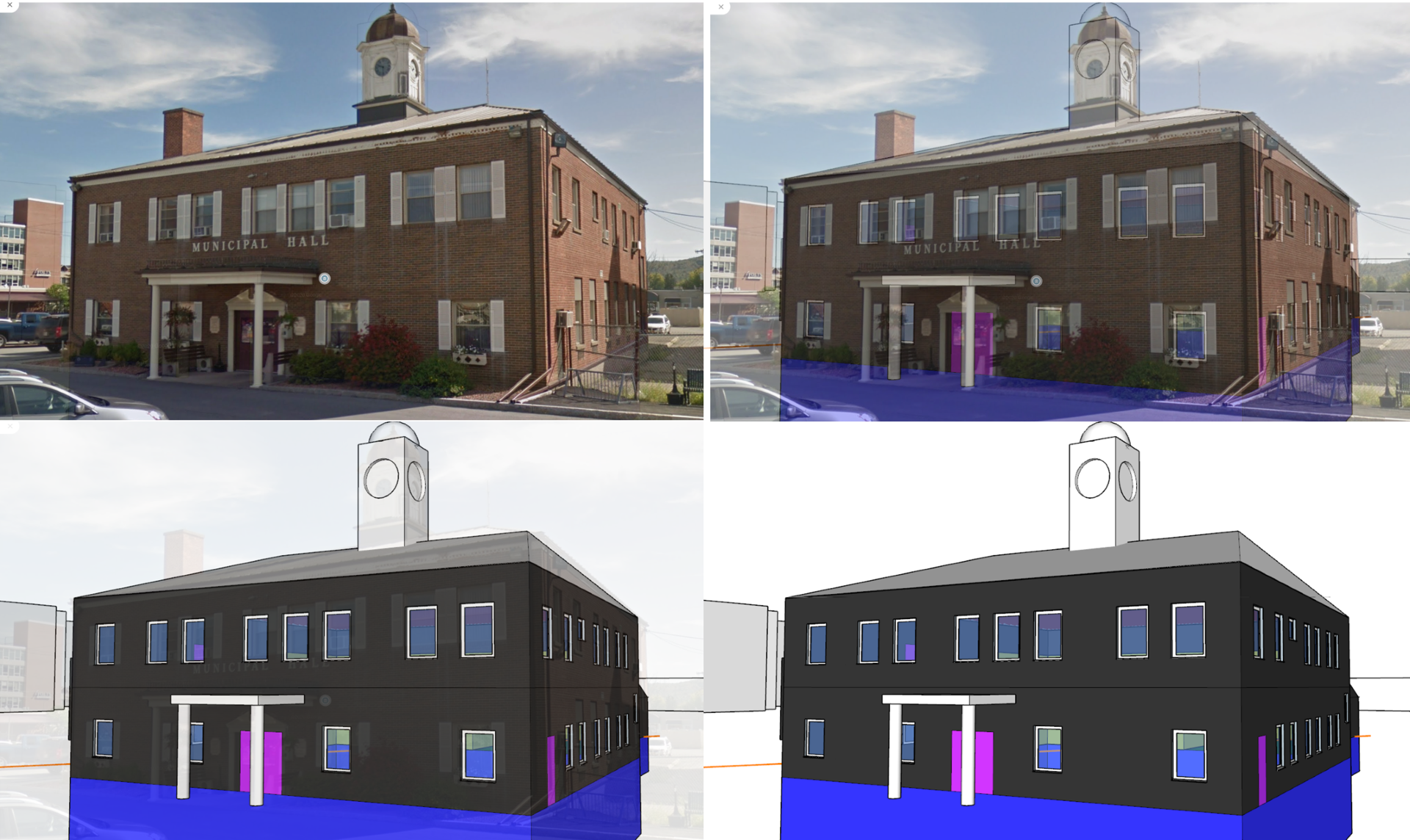
This one-hour technical webinar examines how predictive, physics-based energy modeling serves as the backbone for transforming existing building stock into certified EnerPHit projects. While Passive House modeling is traditionally seen as a design tool for new construction, its most potent application may lie in the strategic retrofit of existing envelopes.
Participants will learn the methodology of Model Calibration: the process of aligning a PHPP (Passive House Planning Package) model with historical utility invoices. By normalizing for weather and operational behavior, practitioners can close the "performance gap" before the first hammer hits a nail.
The Bottom Line: Through real-world case studies, this session demonstrates how integrating measured data with the rigorous PHPP engine supports informed decision-making, reduces technical risk, and provides a reliable roadmap to achieving the EnerPHit standard.
Speakers:

As Director of Building Science at AUROS Group, Matt has applied his skills and credentials to well over 100 high-performance projects across typologies, climates, and countries. Matt's project experience stretches from guiding the zero-energy design of small multifamily buildings to delivering fully modeled 15-year decarbonization plans to reach zero energy ready for 1.5mm+ SF government/office building(s). Matt's credentials include Building Energy Modeling Professional (BEMP), PHI-accredited Certifier, Certified Passive House Designer (CPHD), Certified Passive House Tradesperson (PHI), and Passive House, Passive House Planning Package (PHPP) and FLIXO National Trainer
Sponsored by:

Continued Education:
- AIA Credits: 1 LU|HSW
- PHI Credits: 1 CP
Learning Objectives:
- Analyze The PHPP Calibration Workflow: How to use 2–3 years of historical energy data to "tune" PHPP (Passive House Planning Package) inputs, ensuring the model reflects the building’s actual thermal weaknesses.
- De-Risk the Retrofit: Using calibrated simulations to evaluate the ROI of specific measures—such as interior vs. exterior insulation or heat recovery ventilation (HRV) upgrades—to ensure they meet EnerPHit targets.
- Diagnose the Envelope: Using building science principles and measured data to identify thermal bridges and air leakage paths that standard audits might miss.
- Optimize Building Operations: Understanding how occupant behavior and existing MEP systems influence the path to certification, and how to model those variables accurately.
Webinars
105