28th International Passive House Conference: Energy efficiency means independence
28th International Passive House Conference: focus on building renovation and social housing
Press Release
21 May 2026
Energy efficiency means independence
28th International Passive House Conference: focus on building renovation and social housing
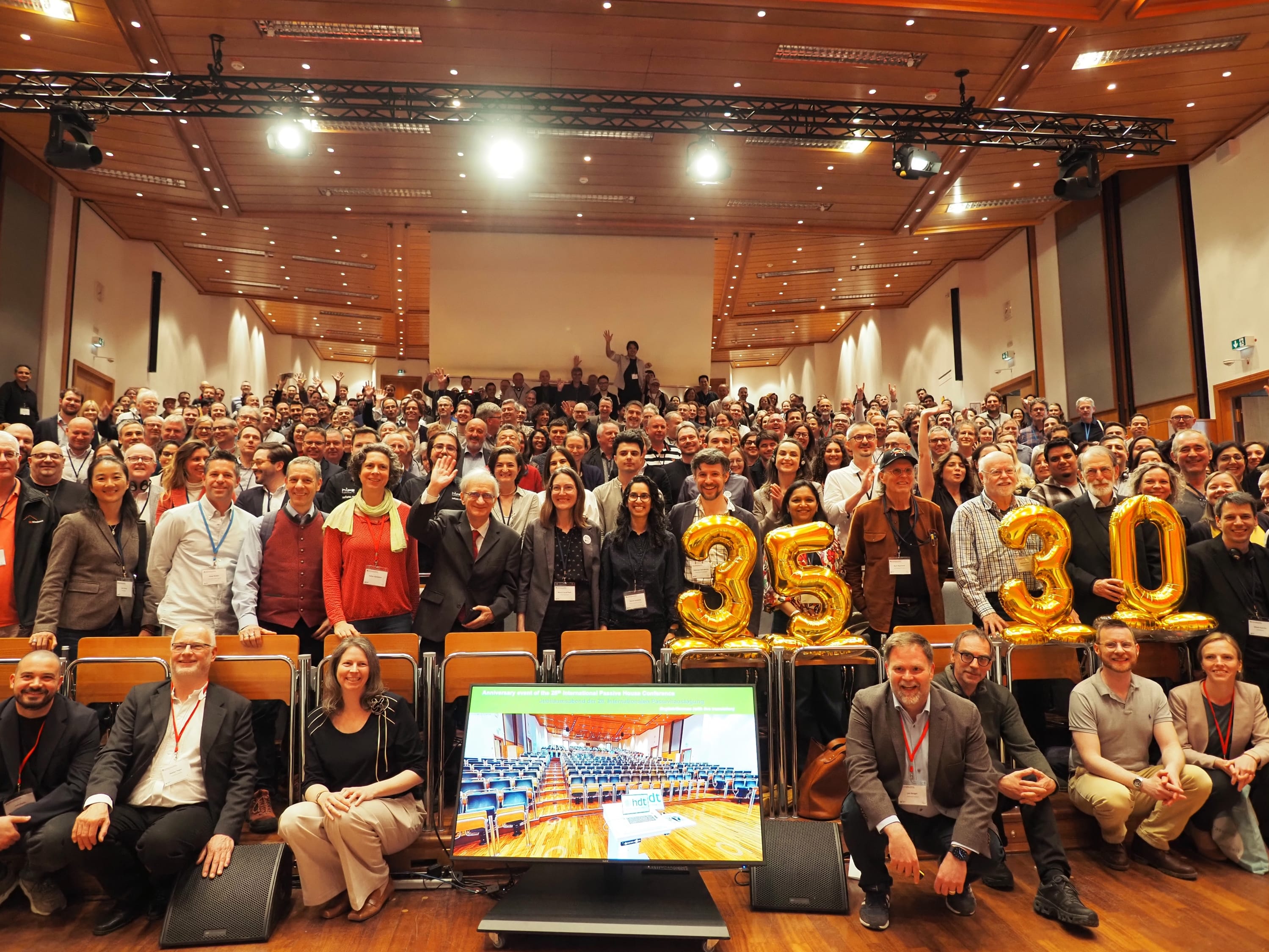
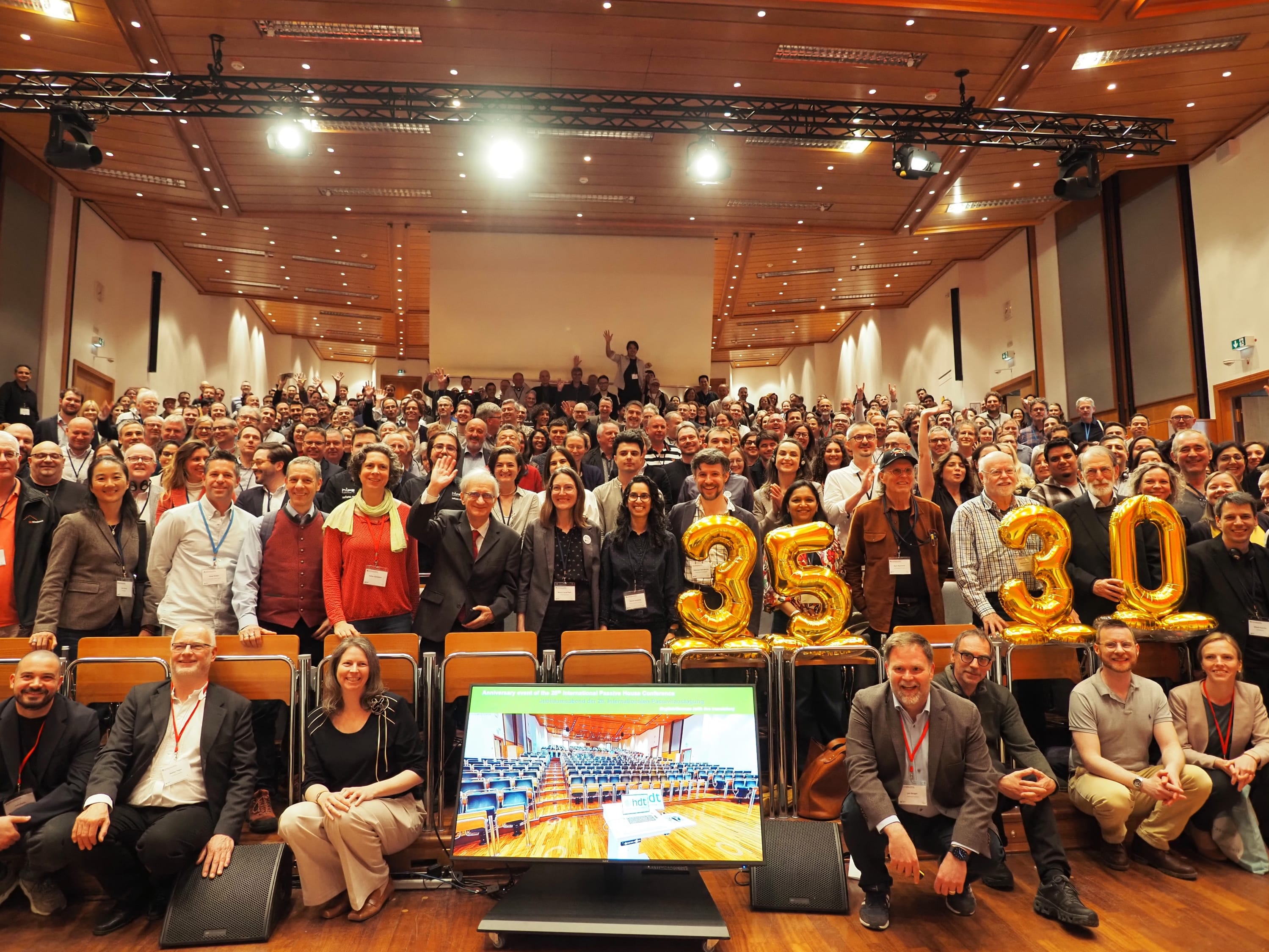
Darmstadt, Germany. Highly energy-efficient buildings are key to reducing dependency on imported fossil fuels – this was emphasised by numerous speakers at the 28th International Passive House Conference in a packed hall in Essen, Germany. For two days, the Haus der Technik became the venue for discussions centred on climate-friendly and sustainable buildings. A particular focus at the conference was on renovation to the EnerPHit standard and social housing. Afterwards, participants visited highly energy-efficient projects in North Rhine-Westphalia, including educational buildings and climate-friendly residential areas. The conference also featured two anniversary celebrations: Wolfgang Feist spoke about the construction of the first Passive House 35 years ago and the founding of the Passive House Institute 30 years ago.
The conference was inaugurated by the Passive House Institute together with Katharina Schubert from the state agency NRW.Energy4Climate, Michael Theben from the North Rhine-Westphalian Ministry of Economic Affairs, and Paula Brandmeyer from Deutsche Umwelthilfe, in front of an audience of around 450 participants. In Essen, two topics were the main focus: energy-efficient renovation of the existing building stock and social housing. According to Jan Steiger and László Lepp from the Passive House Institute, rather than simply implementing cosmetic renovation measures, the existing building stock must be substantially improved in terms of energy efficiency. The research institute has developed the EnerPHit standard for deep renovation in line with the Passive House concept.
Energy efficiency and renewable energy
Steiger and Lepp emphasised that high energy efficiency and the integration of renewable energy should not be seen as competing objectives. “On the contrary: reducing energy consumption and integrating renewable energy complement each other. Moreover, high energy efficiency in new builds and retrofits is also a matter of fairness, as this is the only way low-income households can afford their energy bills,” explained Jan Steiger.
Focus number 1: Deep retrofits
Numerous speakers presented international retrofit projects, including the modernisation of a housing complex built in 1971 in Groningen, the Netherlands. The 119 owner-occupied flats were renovated using Passive House components while they were inhabited, resulting in the building now meeting the EnerPHit standard. Residents benefit in three ways: from significantly reduced energy costs, increased living comfort and a clear increase in the value of the flats. The renovation of a 1962 office building in Brittany, France, demonstrates that existing buildings can achieve high energy efficiency even in the face of unwelcome surprises – asbestos contamination in this case. The building was renovated to the EnerPHit standard using prefabricated elements, and the quality of the work was confirmed by a certificate. In New York, the project team transformed a historic fire station building into a highly thermally insulated EnerPHit building with four apartments using Passive House components.
Focus number 2: Affordable housing
Other presentations focused on renovations in warm climates, including the first EnerPHit renovation of a block of flats near Athens. In Greece, energy poverty is twice the European average. The building was renovated to the EnerPHit standard at a relatively low cost. The 1970s building in Tavros, renovated while it was occupied, is home to eight low-income households. The high energy consumption for heating and cooling – around 180 kWh per square metre per year – was supposed to be reduced by 90 per cent, whilst simultaneously improving the quality of life for residents. Due to the ongoing shortage of skilled workers and labour, local tradespeople and refugees were trained, Maria-Isavella Gkadri explained. This certified EnerPHit renovation was planned and implemented by the Passivistas group of experts as part of the EU project RINNO, with the support of the Hellenic Passive House Institute.
"Resilient construction"
More than 300 students also visited the deep retrofit project in Tavros. Thanks to the roof-mounted photovoltaic system, this building even achieved the EnerPHit Plus standard. The award-winning project, in which communication with the initially sceptical residents played an important role, now serves as a model for the deep renovation of around 250 other buildings of the same type and age in the town. The fact that affordable homes and social housing are a global issue is also demonstrated by other international projects in Scotland and Cyprus. In Austria, the housing construction association Neue Heimat Tirol (“New Home Tyrol”) has renovated 3,800 homes in buildings in Innsbruck with poor energy performance, in 17 locations in total. At the same time, it has also created new living spaces, resulting in around 5,000 social housing units meeting the Passive House standard. For buildings with large-scale rooftop solar panels, rent that already includes heating costs, also covers electricity costs. "Energy-efficient construction means cost-effective and resilient construction", summarised Harald Konrad Malzer of Neue Heimat Tirol.
"Lives have substantially improved"
In the New York borough of Harlem, the 'Sendero Verde' project has created affordable housing for over 700 households. The three architecturally sophisticated buildings now also offer residents numerous communal areas dedicated to health, neighbourhood support and learning, as well as an extensive green space outside. The new flats built to the Passive House standard have substantially improved the lives of the tenants, explained architect Deborah Moelis. Passive House certifier Dragoș-Ionut Arnăutu oversaw this challenging project as a certifier for the Passive House Institute. He spoke about the challenges of quality assurance during the planning and construction of Sendero Verde.
"Low running costs"
Dave Fraser from Ontario, Canada, presented a social housing development comprising 24 residential units that used prefabricated elements. "Passive House buildings are the obvious choice for developers who want to keep running costs as low as possible over the entire lifespan of a building," explained Fraser in his presentation.
"Greater satisfaction, lower vacancy rates"
The founder of the Passive House Institute, Wolfgang Feist, spoke about current developments in the UK and Ireland, where, alongside projects such as the impressive new Oxford University building, large-scale social housing develop-ments in particular are being constructed to be highly energy-efficient. "These companies have realised that, although the Passive House standard necessitates a slight in-crease in construction costs, it pays for itself fairly quickly through lower running costs, less maintenance, greater user satisfaction and, consequently, lower vacancy rates."
"Completely lost it!"
The physicist and his family, together with three other families, built the first Passive House building in Darmstadt and moved into it in 1991. In view of the energy crises at the time, scientists had already been working on improving the energy efficiency of buildings as early as the 1970s. Following a research project in southern China in the 1980s, the Swedish civil engineer Bo Adamson suggested to him that they build houses also in Europe without conventional heating but with good living comfort. "My first reaction at the time was: 'Now, he’s completely lost it!”, said Feist in his lecture celebrating the double anniversary. He also spoke of the challenges he faced when building the first Passive House 35 years ago and when he established the Passive House Institute 30 years ago.
"It's the solution!"
As scientists, they then investigated what else was necessary – apart from good thermal insulation, triple-glazed windows and a ventilation system with heat recovery – to ensure that heat remained inside the building for a long time: airtightness and the prevention of thermal bridges. This was followed by the construction of the first Passive House building complex in Darmstadt for four families. Wolfgang Feist recounted that during a visit, the American energy researcher Amory Lovins remarked on the drastically reduced energy consumption: "This isn’t just a scientific experiment! It's the solution!". (Interview with Wolfgang Feist)
"Objectives, experts, planning tools, and components"
In 1996, the building physicist founded the Passive House Institute, also in Darmstadt. In the same year, the Research Group on Cost-Effective Passive Houses – still existing today – was launched, and the first Passive House Conference took place as well. Furthermore, the first Passive House developments, including those in Hanover and Wiesbaden, were built during this period. Together with Jessica Grove-Smith, a member of the Passive House Institute’s Board of Directors, Feist outlined what is needed for a successful energy transition in the building sector: clear objectives, qualified experts, reliable planning tools and the right components. The further training of specialists and the quality assurance of buildings and components – key priorities of the Passive House Institute – also make important contributions to this. As a university professor, Wolfgang Feist also contributed to the dissemination of knowledge: until 2019, he taught building physics and energy-efficient construction at the University of Innsbruck for over ten years.
Specialists' exhibition and excursions
A trade exhibition accompanied the conference in the Haus der Technik in Essen. For two days, manufacturers showcased their energy-efficient building components, including Passive House windows and ventilation units with heat recovery, as well as measurement systems for airtight-ness testing. During four excursions, among other projects, participants were able to visit Passive House kindergartens, a student hostel and climate-friendly urban districts and cooperative housing projects in Hilden, Düsseldorf and Cologne.
2027 in Innsbruck
The 29th International Passive House Conference will take place next year in Innsbruck, Austria. The Passive House Institute, in collaboration with the University of Innsbruck, extends the invitation to attend from 2 to 4 April 2027. The latest information can be found under www.passivehouseconference.org as well as on social media under #28intPHC, and #29intPHC on the next conference.
This press release is available here together with accompanying images.
General information
Professor Dr. Wolfgang Feist - Interview on the occasion of the double anniversary: 35 years of Passive House and 30 years of the Passive House Institute
Webinar “Project Spotlight”, 3 June 2026: The Seed Cohousing - exploring shared living in an eco Passive House
Passive House buildings: The construction of the first Passive House building in 1991 was followed by office buildings, kindergartens, schools, sports facilities and supermarkets, etc. In addition, renovations to the EnerPHit standard are becoming increasingly common. In order to achieve significant savings in running costs and prevent structural damage, local authorities are also increasingly prioritising high energy efficiency in indoor swimming pools and healthcare buildings. Three years ago, the world’s first certified Passive House hospital opened in Frankfurt, Germany. The Passive House Institute had carried out a series of baseline studies.
Passive House concept: With the Passive House concept, the heat loss that typically takes place in buildings through the walls, windows and roof is drastically reduced. By applying the following five basic principles - 1. Excellent thermal insulation, 2. Windows with good thermal insulation and triple glazing, 3. A ventilation system with heat recovery 4. Avoidance of thermal bridges, 5. An airtight building envelope - a Passive House building needs very little energy for heating and cooling. For this reason, Passive House buildings can dispense with a traditional heating system. A major part of its remaining small heating demand is met through "passive" sources such as solar radiation or the heat emitted by occupants and technical appliances. The Passive House Institute has developed the EnerPHit-Standard for deep retrofits of existing buildings. Project database
EnerPHit standard: The EnerPHit standard for building retrofits follows the principles of the Passive House concept, but takes into account factors such as an unfavourable orientation of the building or an uninsulated floor slab, etc.
Advantages of the Passive House & EnerPHit standards: 1. Increased thermal comfort. 2. In winter the heating demand is very low; the heat escapes out of the home very slowly. 3. The cooling demand of Passive House buildings in the summer is low; the excellent level of thermal protection keeps the heat out. 4. Social justice: low energy costs also mean low utility costs – the basis for affordable homes and social housing.
Passive House and renewable energy: The Passive House standard and generation of renewable energy is an excellent combination. The Passive House Institute has introduced Passive House Plus and Passive House Premium. The first Passive House building in the world in Darmstadt also generates renewable energy with a photovoltaic system that was installed in 2015, for which it received the Passive House Plus certificate.
PHPP: The Passive House Institute developed the planning tool PHPP (Passive House Planning Package) for the energy balance calculation of highly energy efficient buildings. The energy demand of the building later on is already reliably calculated using the PHPP during planning.
Passive House Institute: The Passive House Institute founded by Professor Wolfgang Feist in 1996 is an independent organisation holding a leading position in research and development relating to highly energy efficient construction and building retrofits.
iPHA: The purpose of the membership based international Passive House Association (iPHA) is the dissemination of knowledge as well as networking.
Social Media:
Bluesky: @ipha.bsky.social
Facebook: International Passive House Association
Youtube: iPHA
LinkedIn: Passive House Institute | ipha
Contact: Katrin Krämer / Press Officer / Passive House Institute / www.passivehouse.com
Email: presse@passiv.de // Tel: (+49) (0)6151 / 826 99-25
Images